PROJECT QUANTUM
Building a stronger water future for Brownsville.
A framework for up to $220 million in private funding for qualifying water and wastewater projects while maintaining City and BPUB control of Brownsville's public water system.
Overview
A long-term investment in Brownsville's water future
Brownsville has secured an extraordinary opportunity to strengthen its water supply capacity for residents, businesses and future generations. Project Quantum, as developed by the City of Brownsville, establishes a framework for up to $220 million in private funding for qualifying water and wastewater projects while maintaining BPUB control of Brownsville's public water system. The result is a win-win agreement that brings substantial private investment to Brownsville, reduces future pressure on utility customers, and preserves public control of the water supply.
Commissioners and staff worked closely with BPUB to develop terms that strengthened the positions of the City and BPUB, while better aligning the agreement with the parties’ roles and obligations. The approved memorandum of understanding (MOU) does not allocate SpaceX one gallon of water or give the company ownership of any water capacity.
Benefits at a Glance
Up to $220 million
Up to $220 million for qualifying water and wastewater infrastructure, subject to the agreement's terms and milestones
Potential new water supply
Approximately 18 to 21 million gallons per day of potential new water capacity
More resilient supply
A more diverse water supply and less dependence on the Rio Grande
Reduced customer pressure
Reduced need for BPUB to finance the same water capacity through borrowing, utility rates, or other local resources
Public control
BPUB, as an entity of the City, retains control of the public water supply
No additional water promised
No additional water allocated to SpaceX or gives the company ownership of any water capacity
Water Projects
Two proposed water projects
Brownsville’s water utility is managed through the Brownsville Public Utilities Board (“BPUB”). Brownsville uses about 21 million gallons of water each day, and approximately 70% comes from the Rio Grande. Drought, growth, and increasing demand make additional water sources essential. The projects contemplated by the agreement could add approximately 18 to 21 million gallons per day from two alternate sources. The agreement leaves open the possibility for other projects that benefit the expansion of water resources in Brownsville and Cameron County. Texas communities are responsible for developing and paying for the water supplies they will need; the state does not build those local systems for them, and, from time to time, it provides funding to those communities.
Water Renewal Project
This project will recover up to 8.0 million gallons per day (MGD) of highly treated water from the Robindale Plant and renew it through multiple stages of treatment, including reverse osmosis, before it enters the potable water system.
Instead of being discharged to San Martin Lake, the water will undergo advanced treatment, pass through the Brownsville resacas as an environmental buffer, and receive comprehensive drinking water treatment to ensure it meets rigorous state and federal drinking water standards.
With the Water Renewal Project, every drop has a future, helping diversify Brownsville's water portfolio by creating a dependable local source that supports long-term water security and resilience.
Expected capacity: APPROX 8M GALL / DAY
SRWA Optimization and Expansion
This project aims to expand the Brackish Groundwater Treatment Facility from 7.5 MGD to 10 MGD, with a long-term goal of 20 MGD.
Expected capacity: APPROX 10M GALL / DAY
The original contribution-in-aid-of-construction proposal contemplated additional water for SpaceX. The City retained independent outside counsel, and commissioners and staff from the City Attorney’s Office negotiated a new memorandum of understanding. The approved MOU:
• Does not allocate SpaceX one additional gallon of water
• Does not guarantee SpaceX more water than it receives today
• Does not give SpaceX ownership of new water capacity
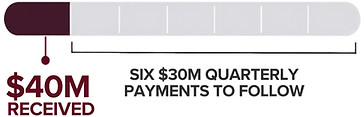
• Creates a framework for an initial $40 million contribution and six quarterly payments of $30 million, for up to $220 million
SpaceX’s representative stated at the August 29, 2026, City Commission meeting that the company would not execute the Project Quantum agreement unless the disannexation was approved. That statement understandably led some people to view the two matters as connected. It reflected SpaceX’s position on signing the agreement; the City Commission was required and did evaluate the disannexation request under the applicable state-law criteria. Turning down the SpaceX offer would not have ended its attempts to deannex the land in question. The City did not give SpaceX public land, nor did it purchase the land for them. The 444 acres were privately owned, undeveloped, and had received no municipal services for roughly three decades. SpaceX's broader purchase involved more than 1,000 acres. Approximately 556 acres were requested to remain inside Brownsville, including the future site of a proposed $3 billion development that, according to information presented by the City, could generate about $6 million in annual City tax revenue.
The City will no longer collect property tax from the 444 disannexed acres, but the current contribution was limited because the land was undeveloped. In exchange, the agreement to keep the remaining acreage in the City with a proposed $3 billion development could generate about $6 million in annual City tax revenue.
BPUB, as an entity of the City, maintains control of Brownsville's water system. The agreement does not require BPUB to provide water for any project. BPUB is obligated by state law to serve retail customers within its service territory, which includes areas outside of the City.
No specific development plan or any particular business or use has been confirmed for the disannexed property. Any proposed use would be reviewed under the requirements in effect at the time of application. Texas law now imposes additional infrastructure costs, screening, financial security requirements, and emergency curtailment obligations on large electric users, including many data centers. As of September 21, 2026, Governor Abbott has directed the Texas Commission on Environmental Quality (TCEQ) to halt all permits sought by data centers until the Electric Reliability Council of Texas (ERCOT) completes its audit. Because the Public Utility Commission of Texas (PUCT), ERCOT, and the Texas Water Development Board (TWDB) require that information to make informed decisions, no state agency may proceed with regulatory approvals for data center development until the information is acquired.
Frequently Asked Questions
“Project Quantum” is a City project meant to give Brownsville an extraordinary opportunity to secure new regional water supplies without placing the full cost on local utility customers. After negotiations, the City approved a framework by which SpaceX would contribute up to $220 million in private funding while retaining control of Brownsville's water system and making no reservation of water to SpaceX. The City Commission sees this as a win-win agreement that strengthens Brownsville's water future while protecting residents and public control of the water supply.
What is Project Quantum?
Project Quantum was the executive session code name used by the City Attorney’s Office to advise the City Commission of an agreement that creates a framework to receive up to $220 million from SpaceX for qualifying water and wastewater infrastructure projects benefiting Brownsville and Cameron County.
Why is the agreement important?
Brownsville’s water utility is managed through the Brownsville Public Utilities Board (“BPUB”). Brownsville uses about 21 million gallons of water each day, and approximately 70% comes from the Rio Grande. Drought, growth and increasing demand make additional water sources essential. The projects contemplated by the agreement could add approximately 18 to 21 million gallons per day from two alternate sources. The agreement leaves open the possibility for other projects that benefit the expansion of water resources in Brownsville and Cameron County. Texas communities are responsible for developing and paying for the water supplies they will need; the state does not build those local systems for them, and, from time to time, it provides funding to those communities.
How did negotiations improve the deal?
The original proposal contemplated a guaranteed amount of water for SpaceX. Commissioners and the City Attorney’s Office brought in outside counsel to work with the City’s legal team and, with assistance from BPUB’s legal team, negotiated a different structure. The approved agreement does not allocate SpaceX one gallon of water or give the company ownership of any water capacity.
Why was the property disannexed?
The property was undeveloped and had received no municipal services for roughly three decades. Voting “no” would not necessarily guarantee that Brownsville would keep jurisdiction. A “no” vote could also have ended the City's negotiating leverage and left Brownsville with a lost opportunity for substantial funding for its water future. In the Commission’s view, passing up the agreement could have been a historic mistake for Brownsville's long-term water security.
Could a data center be built there?
No data center or any particular business or use has been confirmed. Any proposed use would be reviewed under the requirements in effect at the time of application. Texas law now imposes additional infrastructure costs, screening, financial security requirements, and emergency curtailment obligations on large electric users, including many data centers. As of September 21, 2026, Governor Abbott has directed the Texas Commission on Environmental Quality (TCEQ) to halt all permits sought by data centers until the Electric Reliability Council of Texas (ERCOT) completes its audit. Because the Public Utility Commission of Texas (PUCT), ERCOT, and the Texas Water Development Board (TWDB) require that information to make informed decisions, no state agency may proceed with regulatory approvals for data center development until the information is acquired.
Was the disannexation of 444 acres of privately owned, undeveloped property connected to Project Quantum?
No, state law only allows the City Commission to consider the following in disannexation cases: 1)Whether the municipality has a population of 4,000 or more; 2)Whether the property is located in a county with a population of more than 205,000; 3)Whether the area is composed of at least three contiguous acres that are unimproved and adjoining the municipal boundaries; and 4)Whether the property receives services from the City, such as water, sewer, electricity, police, and fire, to name a few. SpaceX’s representative stated at the August 29, 2026, City Commission meeting that the company would not execute the Project Quantum agreement unless the disannexation was approved. That statement understandably led some people to view the two matters as connected. It reflected SpaceX’s position on signing the agreement; the City Commission was required and did evaluate the disannexation request under the applicable state-law criteria. Turning down the SpaceX offer would not have ended its attempts to deannex the land in question.
Did the City give up regulatory control over the 444 acres of privately owned land by disannexation?
Disannexation changed the City’s regulatory authority over the property, but it did not mean the land became completely unregulated. Under Texas law, cities have substantially greater land-use authority over property inside their corporate limits than over property in the Extraterritorial Jurisdiction (ETJ). Inside city limits, cities can generally regulate land use through zoning, development standards, building codes and platting requirements. In the ETJ, cities cannot enforce traditional zoning or most building codes, but they retain certain authority over subdivision plats, roads and infrastructure. The 444 acres had been zoned Heavy Industrial (HI) while inside the City. That zoning allowed a broad range of intensive uses by right, including uses such as concrete batch plants, manufacturing and heavy utility operations. The HI designation reflected the property's proximity to the Port of Brownsville and the City’s landfill area. Following disannexation, the City no longer has the same municipal zoning authority over the property that it had while the land was within the city limits. However, disannexation does not eliminate all regulation. The property remains subject to applicable county and state requirements, including regulations administered by state agencies. In addition, Texas law significantly limits the ability of municipalities to impose local environmental and other regulations that are preempted by state law. In practical terms, the key change is that the City’s zoning authority over the 444 acres was removed through disannexation; it did not mean the property became exempt from regulation altogether.
What projects could be funded?
Potential qualifying projects include, but are not limited to, the SRWA Optimization and Expansion Projects and the Water Renewal Project. As qualified projects are identified and approved, BPUB will establish key milestones and a public dashboard to enable everyone to track progress.
How much will SpaceX provide?
The agreement establishes up to $220 million in funding, subject to agreed terms, and project qualifications and milestones. It calls for an initial $40 million contribution, followed by six quarterly payments of $30 million each, deposited into an escrow account.
How does this benefit taxpayers and utility customers?
Private funding can reduce the amount Brownsville would otherwise need to borrow or recover from utility customers to build these projects. The only grant received to date was $12.7 million awarded by the Texas Water Development Board (TWDB) on February 19, 2026. Without SpaceX’s contribution, Brownsville would eventually have to finance the same water capacity through borrowing, utility rates, or other local resources.
Was all of the property removed from the City?
No. SpaceX's broader purchase involved more than 1,000 acres. Approximately 444 acres were requested for disannexation, while about 556 acres were requested to remain inside Brownsville. According to information presented by a commissioner, the acreage remaining in the City includes the future site of a proposed $3 billion development that could generate about $6 million in annual City tax revenue.
What about environmental concerns?
Air, water, launch, and habitat issues are primarily overseen by state and federal agencies, including TCEQ, EPA, and FAA. Disannexation does not remove those laws, permits, or enforcement responsibilities. The City does maintain an Air Quality Sensor Network. Our sensor network measures PM2.5 and NO2 at all locations, with one location also measuring Black Carbon. Black Carbon is also called soot and is formed when things like gas, wood, and other materials aren’t fully burned. Please visit https://www.brownsvilletx.gov/2597/Air-Quality for the most up-to-date information on the Air Quality Index within the City.
Did the City give SpaceX public land?
No. The 444 acres were privately owned. The City did not own the property, did not purchase it for SpaceX, and did not transfer taxpayer-owned land.
Does SpaceX control Brownsville's water?
No. BPUB, as an entity of the City, maintains control of the public water supply for the benefit of all of its customers within its service territory and for its wholesale customers. The agreement does not reserve new capacity for SpaceX nor obligate BPUB to provide water for any projects. However, BPUB must serve all customers within its service area, which includes areas outside of the City’s limits.
Why was the vote held on a short timeline?
The City was given a limited timeframe. The process moved faster than many people would have preferred, but commissioners had to decide whether to preserve the negotiated opportunity or risk losing both jurisdictional leverage and up to $220 million for water infrastructure funding.